

As a seasoned supplier in the CNC machine industry, I often encounter customers with diverse needs and inquiries. One question that frequently arises is whether a 3 - axis CNC machine can be upgraded to a 5 - axis CNC machine. This topic is not only of great interest to those looking to expand the capabilities of their existing equipment but also has significant implications for the efficiency and versatility of manufacturing processes. In this blog, I'll delve into the technical possibilities, challenges, and considerations associated with such an upgrade.
Understanding the Basics: 3 - Axis vs. 5 - Axis CNC Machines
Before discussing the upgrade, it's essential to understand the fundamental differences between 3 - axis and 5 - axis CNC machines. A 3 - axis CNC machine operates along three linear axes: X (left - right), Y (front - back), and Z (up - down). These machines are commonly used for simple machining tasks such as drilling, milling flat surfaces, and cutting basic shapes. They are relatively straightforward to operate and maintain, making them a popular choice for small - to - medium - sized manufacturing operations.
On the other hand, a 5 - axis CNC machine adds two rotational axes to the mix, typically the A - axis (rotation around the X - axis) and the B - axis (rotation around the Y - axis). This additional movement allows the cutting tool to approach the workpiece from virtually any angle, enabling the production of complex geometries with high precision. 5 - axis machines are widely used in industries such as aerospace, automotive, and medical device manufacturing, where intricate parts with tight tolerances are required.
Technical Feasibility of the Upgrade
The technical feasibility of upgrading a 3 - axis CNC machine to a 5 - axis machine depends on several factors. Firstly, the mechanical structure of the existing 3 - axis machine must be robust enough to support the additional rotational axes. The machine's frame, guideways, and spindle need to be able to withstand the increased forces and vibrations associated with 5 - axis machining. If the machine's mechanical components are not up to the task, the upgrade may result in poor machining quality, reduced accuracy, and even premature wear of the components.
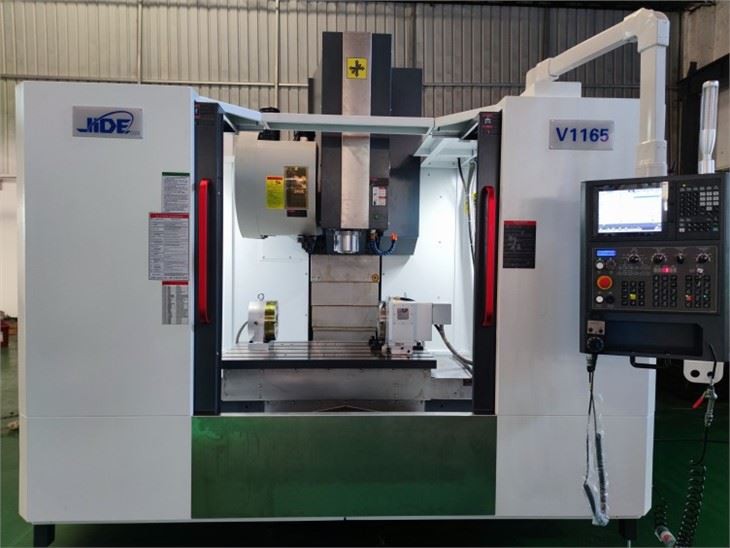

Secondly, the control system of the 3 - axis machine needs to be compatible with the new 5 - axis functionality. Most modern CNC control systems have the ability to be upgraded with additional software and hardware modules to support 5 - axis machining. However, older control systems may not have the necessary processing power or programming capabilities to handle the complex motion control required for 5 - axis operations. In such cases, a complete replacement of the control system may be necessary, which can significantly increase the cost of the upgrade.
Another crucial aspect is the tooling and fixture requirements. 5 - axis machining often requires specialized cutting tools and fixtures to ensure proper access to the workpiece from different angles. The existing tooling and fixtures of the 3 - axis machine may not be suitable for 5 - axis operations, and new ones may need to be designed and purchased. This can add to the overall cost and complexity of the upgrade.
Challenges and Considerations
Upgrading a 3 - axis CNC machine to a 5 - axis machine is not without its challenges. One of the main challenges is the cost. The upgrade typically involves purchasing and installing new mechanical components, such as rotary tables and tilting heads, as well as upgrading the control system and software. Additionally, there may be costs associated with training the operators to use the new 5 - axis functionality effectively. These costs can quickly add up, and in some cases, it may be more cost - effective to purchase a new 5 - axis CNC machine instead.
Another challenge is the programming complexity. 5 - axis machining requires more advanced programming skills compared to 3 - axis machining. The programmer needs to be able to create complex toolpaths that take into account the additional rotational axes and the orientation of the cutting tool relative to the workpiece. This requires a deep understanding of CNC programming principles and the use of specialized CAD/CAM software. If the existing programming staff does not have the necessary skills, additional training or hiring of new personnel may be required.
Furthermore, the upgrade process itself can be time - consuming and disruptive to the manufacturing operations. The machine needs to be taken out of service for a period of time to install the new components and perform the necessary calibration and testing. This can result in lost production time and potential delays in meeting customer orders.
Benefits of the Upgrade
Despite the challenges, upgrading a 3 - axis CNC machine to a 5 - axis machine can offer several significant benefits. One of the main advantages is the ability to produce more complex parts with higher precision. 5 - axis machining allows for the creation of parts with undercuts, compound angles, and free - form surfaces that would be difficult or impossible to produce on a 3 - axis machine. This can open up new business opportunities for manufacturers, especially in industries that require high - precision components.
Another benefit is increased efficiency. With a 5 - axis machine, multiple machining operations can be performed in a single setup, reducing the need for manual repositioning of the workpiece. This not only saves time but also improves the accuracy and consistency of the parts. Additionally, 5 - axis machining can often achieve better surface finishes, reducing the need for secondary finishing operations.
Our Offerings and Support
As a leading CNC machine supplier, we understand the importance of providing our customers with the best solutions for their manufacturing needs. We offer a wide range of CNC machines, including Vertical Milling Center Machine, Desktop 4 Axis Cnc Milling Machine, and CNC Horizontal Lathe Machine. Our team of experts can assess your existing 3 - axis CNC machine and determine whether an upgrade to a 5 - axis machine is feasible and cost - effective.
We also provide comprehensive support services, including installation, training, and after - sales maintenance. Our technicians have extensive experience in upgrading CNC machines and can ensure that the upgrade process is carried out smoothly and efficiently. Whether you need help with programming, tooling selection, or troubleshooting, our team is here to assist you every step of the way.
Conclusion
In conclusion, upgrading a 3 - axis CNC machine to a 5 - axis machine is technically possible, but it requires careful consideration of several factors, including the mechanical structure, control system, cost, programming complexity, and production disruption. While the upgrade can offer significant benefits in terms of increased capabilities and efficiency, it is not always the best option for every manufacturer.
If you are considering upgrading your 3 - axis CNC machine to a 5 - axis machine or have any other questions about our CNC machines, we encourage you to contact us for a consultation. Our team of experts will be happy to discuss your specific needs and provide you with the best solutions for your manufacturing operations.
References
- "CNC Machining Handbook" by Peter Zelinski
- "Advanced Manufacturing Technology" by Yoram Koren


