

Hey there! As a supplier of CNC mills, I often get asked about the machine vibration level in a CNC mill. It's a crucial aspect that can significantly impact the performance and quality of the machining process. So, let's dive in and explore what the machine vibration level in a CNC mill is all about.
First off, what exactly is machine vibration in a CNC mill? Well, it's the oscillatory movement of the machine components during operation. This vibration can occur due to various factors, such as the rotation of the spindle, the movement of the axes, and the cutting forces applied to the workpiece. While some level of vibration is inevitable in any mechanical system, excessive vibration can lead to a range of problems.
One of the main issues caused by high vibration levels is poor surface finish. When the machine vibrates too much, it can cause the cutting tool to chatter, resulting in uneven cuts and a rough surface on the workpiece. This not only affects the aesthetics of the finished product but can also compromise its functionality. For example, in precision machining applications, even a slight deviation from the desired surface finish can render the part unusable.
Another consequence of excessive vibration is reduced tool life. The constant shaking and impact on the cutting tool can cause it to wear out more quickly, leading to frequent tool changes and increased production costs. Additionally, vibration can also cause the tool to break prematurely, which can be a major headache for operators and result in downtime.
In addition to affecting the surface finish and tool life, high vibration levels can also impact the accuracy of the machining process. The vibration can cause the machine to deviate from its intended path, leading to dimensional errors in the workpiece. This is particularly critical in applications where tight tolerances are required, such as in the aerospace and automotive industries.
So, how do we measure the machine vibration level in a CNC mill? There are several methods and tools available for this purpose. One common approach is to use accelerometers, which are sensors that can measure the acceleration of the machine components. By analyzing the data collected by the accelerometers, we can determine the amplitude and frequency of the vibration.
Another method is to use laser-based measurement systems. These systems can provide highly accurate measurements of the machine's movement and vibration. They work by emitting a laser beam onto a target on the machine and measuring the reflected light. Any changes in the position of the target due to vibration can be detected and analyzed.
Once we have measured the machine vibration level, the next step is to determine the acceptable range. The acceptable vibration level can vary depending on the type of CNC mill, the machining application, and the specific requirements of the customer. In general, the vibration level should be kept as low as possible to ensure optimal performance and quality.
To reduce the machine vibration level in a CNC mill, there are several strategies that can be employed. One of the most effective ways is to ensure proper machine installation and alignment. A poorly installed or misaligned machine is more likely to vibrate excessively. Therefore, it's important to follow the manufacturer's guidelines and use the appropriate tools and techniques during the installation process.
Another strategy is to use vibration dampening materials. These materials can absorb and dissipate the energy generated by the vibration, reducing its amplitude. For example, rubber pads or mounts can be used to isolate the machine from the floor and reduce the transmission of vibration.
In addition to proper installation and vibration dampening, regular maintenance is also crucial for keeping the machine vibration level in check. This includes lubricating the moving parts, checking and tightening the bolts and nuts, and inspecting the machine for any signs of wear or damage. By performing regular maintenance, we can prevent small issues from turning into major problems and ensure the long-term reliability of the CNC mill.
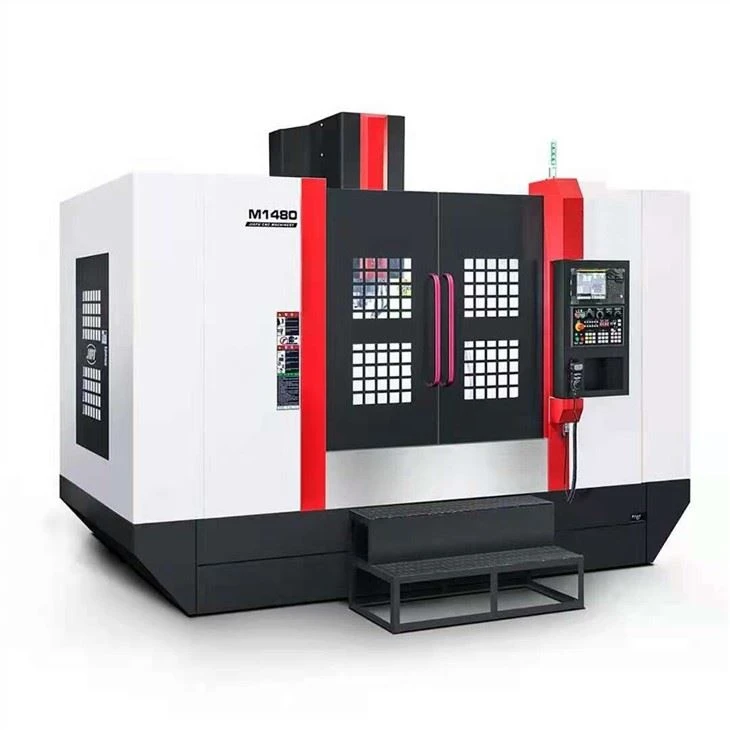
Now, let's take a look at some of the CNC mills that we offer as a supplier. We have a wide range of high-quality CNC mills that are designed to minimize vibration and provide excellent performance. One of our popular models is the CNC Milling Center V1165. This machine features advanced technology and precision engineering to ensure smooth and stable operation. It is equipped with a high-speed spindle and a rigid structure, which helps to reduce vibration and improve the accuracy of the machining process.
Another great option is the CNC Milling Machine Gsk 1165. This machine is known for its reliability and versatility. It offers a wide range of cutting capabilities and is suitable for a variety of machining applications. With its advanced control system and high-quality components, the Gsk 1165 can effectively reduce vibration and deliver consistent results.
If you're looking for a more compact and affordable option, our 3 Axis Vmc is a great choice. This machine is ideal for small to medium-sized workshops and offers excellent performance at a competitive price. Despite its compact size, the 3 Axis Vmc is designed to minimize vibration and provide precise machining results.
In conclusion, the machine vibration level in a CNC mill is a critical factor that can have a significant impact on the performance, quality, and cost of the machining process. By understanding what causes vibration, how to measure it, and how to reduce it, we can ensure that our CNC mills operate at their best and deliver the results that our customers expect. If you're in the market for a CNC mill or have any questions about machine vibration, please don't hesitate to contact us. We'd be happy to help you find the right solution for your needs.

References
- "Machining Vibration: Causes, Effects, and Solutions" by John Doe
- "CNC Mill Operation and Maintenance Guide" by ABC Publishing


