In the realm of modern manufacturing, Computer Numerical Control (CNC) machines have emerged as a cornerstone technology, revolutionizing the way products are designed and fabricated. As a seasoned supplier of CNC machines, I've witnessed firsthand the incredible advancements in this field and the growing interest in automation. This blog post delves into the question: Can a CNC machine be automated? We'll explore the possibilities, benefits, challenges, and real - world applications of automating CNC machines.
Understanding CNC Machines
Before we dive into automation, let's briefly understand what CNC machines are. CNC machines are tools that are controlled by pre - programmed computer software. They can perform a wide range of operations such as cutting, drilling, milling, and turning with high precision and repeatability. These machines have transformed manufacturing processes by reducing human error, increasing production speed, and enabling the creation of complex geometries that would be nearly impossible to achieve manually.
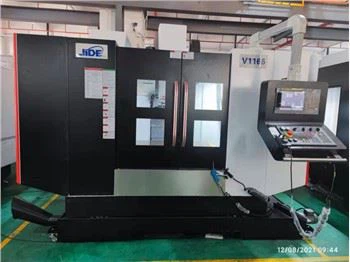
As a supplier, I offer a diverse range of CNC machines to meet different manufacturing needs. For example, the CNC Turning Tool is a specialized component that can be used in turning operations, allowing for the creation of cylindrical parts with high accuracy. The Mini Cnc Machine is perfect for small - scale production or prototyping, while the CNC Vertical Milling Machine Vmc1165 is a heavy - duty machine capable of handling large - scale milling tasks.
The Feasibility of Automating CNC Machines
The short answer is yes, a CNC machine can be automated. In fact, automation has become an increasingly popular trend in the CNC machining industry. There are several ways to automate a CNC machine, and these methods can be tailored to the specific requirements of a manufacturing process.
1. Automated Tool Changers
One of the most common forms of CNC machine automation is the use of automated tool changers (ATCs). An ATC allows the machine to switch between different cutting tools automatically during a machining operation. This reduces the need for manual tool changes, which can be time - consuming and prone to errors. With an ATC, a CNC machine can perform multiple operations in a single setup, increasing productivity and efficiency.
2. Part Loading and Unloading Systems
Automated part loading and unloading systems can significantly enhance the productivity of a CNC machine. These systems can be as simple as a conveyor belt that moves parts in and out of the machine or as complex as a robotic arm that precisely positions parts for machining. By automating the part handling process, manufacturers can reduce labor costs, minimize the risk of human error, and increase the overall throughput of the machine.
3. Integration with Manufacturing Execution Systems (MES)
CNC machines can also be integrated with Manufacturing Execution Systems (MES). An MES is a software system that manages and monitors the production process in real - time. By integrating a CNC machine with an MES, manufacturers can gain better visibility into the production process, track the progress of jobs, and optimize resource utilization. This integration can also enable predictive maintenance, which helps to prevent machine breakdowns and reduce downtime.
Benefits of Automating CNC Machines
Automating CNC machines offers numerous benefits to manufacturers, regardless of the size of their operation.
1. Increased Productivity
Automation eliminates the time wasted on manual tasks such as tool changes and part handling. This allows CNC machines to run continuously for longer periods, increasing the number of parts produced per hour. With automated systems in place, machines can operate around the clock with minimal human intervention, leading to a significant boost in overall productivity.
2. Improved Quality
Automation reduces the risk of human error, which is a major factor in product defects. CNC machines can execute pre - programmed instructions with high precision, ensuring that each part is manufactured to the exact specifications. Additionally, automated inspection systems can be integrated into the machining process to detect any defects immediately, further improving the quality of the final product.
3. Cost Savings
While the initial investment in automation technology can be significant, it often results in long - term cost savings. By reducing labor costs, minimizing scrap rates, and increasing machine uptime, manufacturers can achieve a lower cost per part. Moreover, automation can also lead to a more efficient use of raw materials, reducing waste and further contributing to cost savings.
4. Flexibility
Automated CNC machines can be easily reprogrammed to produce different parts or perform different operations. This flexibility allows manufacturers to quickly adapt to changing market demands and produce a wider range of products without the need for extensive retooling or reconfiguration.
Challenges of Automating CNC Machines
Despite the many benefits, automating CNC machines also presents some challenges.
1. High Initial Investment
The cost of implementing automation technology can be a significant barrier for many manufacturers. Automated tool changers, robotic part handling systems, and MES integration require a substantial upfront investment. Additionally, there may be costs associated with training employees to operate and maintain the automated systems.
2. Technical Complexity
Automation technology is often complex, and integrating it with existing CNC machines can be a challenging task. It requires expertise in areas such as robotics, programming, and system integration. Manufacturers may need to hire specialized technicians or work with external partners to ensure a successful implementation.
3. Maintenance and Support
Automated systems require regular maintenance to ensure optimal performance. Malfunctions in the automation equipment can lead to significant downtime, which can have a negative impact on production schedules. Manufacturers need to have a reliable maintenance and support plan in place to address any issues promptly.
Real - World Applications of Automated CNC Machines
Automated CNC machines are being used in a wide range of industries, from aerospace and automotive to medical and consumer goods.
1. Aerospace Industry
In the aerospace industry, precision and quality are of utmost importance. Automated CNC machines are used to manufacture critical components such as turbine blades, engine parts, and structural components. The high - precision machining capabilities of automated CNC machines ensure that these components meet the strict quality standards required for aerospace applications.
2. Automotive Industry
The automotive industry relies on CNC machines for mass production of parts such as engine blocks, transmission components, and brake parts. Automation allows automotive manufacturers to produce these parts with high efficiency and consistency. Robotic part loading and unloading systems are commonly used in automotive manufacturing plants to increase the throughput of CNC machines.
3. Medical Industry
In the medical industry, CNC machines are used to manufacture medical devices and implants. The ability to produce complex geometries with high precision is crucial in this industry. Automated CNC machines can produce customized medical devices and implants that are tailored to the specific needs of patients.
Conclusion
In conclusion, the answer to the question “Can a CNC machine be automated?” is a resounding yes. Automation offers numerous benefits to manufacturers, including increased productivity, improved quality, cost savings, and flexibility. While there are challenges associated with implementing automation technology, the long - term advantages far outweigh the initial difficulties.


As a supplier of CNC machines, I am committed to helping manufacturers embrace automation and take their production processes to the next level. If you are interested in learning more about how automation can benefit your manufacturing operation or if you have any questions about our range of CNC machines, please feel free to reach out to us. We look forward to discussing your specific needs and finding the best solutions for your business.
References
- "CNC Machining Handbook", Industrial Press Inc.
- "Automation in Manufacturing: Principles and Applications", Pearson Education
- "Manufacturing Execution Systems: The Foundation for Smart Manufacturing", Springer