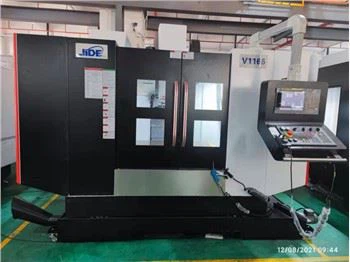
Hey there! As a supplier of Mini CNC Mills, I've seen firsthand how these nifty machines can revolutionize small - scale manufacturing and DIY projects. But like any piece of equipment, Mini CNC Mills have parts that are prone to wear and tear. In this blog, I'll walk you through some of these key components so you know what to look out for.
1. Cutting Tools
Let's start with the most obvious ones: the cutting tools. These are the workhorses of your Mini CNC Mill. Whether you're using end mills, ball nose mills, or drill bits, they're constantly in contact with the material you're machining.
The wear on cutting tools can happen pretty quickly, especially if you're using the machine for extended periods or working with hard materials. When a cutting tool starts to wear, it won't cut as cleanly. You might notice rough edges on your workpiece, or the tool might start to chatter, which can also damage the machine over time.
There are a few factors that can speed up the wear of cutting tools. High cutting speeds, excessive feed rates, and improper lubrication are common culprits. To extend the life of your cutting tools, make sure you're using the right speed and feed settings for the material you're working with, and always use adequate lubrication.
2. Bearings
Bearings are another critical part of a Mini CNC Mill. They're responsible for allowing the moving parts to rotate smoothly. In a CNC mill, you'll find bearings in the spindles, lead screws, and linear guides.
Over time, the constant rotation and load can cause the bearings to wear out. When bearings start to go bad, you might hear strange noises coming from the machine, like a grinding or whining sound. The movement of the machine might also become less smooth, and you could notice a decrease in accuracy.
To prevent premature bearing wear, keep your machine clean. Dust and debris can get into the bearings and cause them to fail. Regularly lubricating the bearings as per the manufacturer's recommendations is also crucial.
3. Belts
Many Mini CNC Mills use belts to transfer power from the motor to the spindle or other moving parts. These belts are subject to tension and friction, which can cause them to stretch or wear out.
A worn - out belt can slip, which means the power transfer won't be as efficient. This can result in a loss of speed or torque, affecting the performance of the machine. You might also notice that the belt starts to make a squealing noise when the machine is running.
Inspect your belts regularly for signs of wear, such as cracks or fraying. If you notice any issues, it's best to replace the belt as soon as possible to avoid further damage to the machine.
4. Linear Guides
The linear guides are what allow the axes of the Mini CNC Mill to move in a straight and precise manner. They're under a lot of stress as the machine moves back and forth during operation.
Wear on linear guides can lead to a decrease in accuracy. You might find that the machine doesn't move as smoothly or that there's some play in the axes. This can be caused by dirt and debris getting into the guides, as well as the normal wear and tear from use.
To keep your linear guides in good condition, clean them regularly and apply the appropriate lubricant. Some modern Mini CNC Mills come with self - lubricating linear guides, which can reduce the maintenance required.
5. Spindle
The spindle is the heart of the Mini CNC Mill. It holds the cutting tool and rotates it at high speeds. The constant rotation and the forces acting on the spindle can cause wear over time.
A worn spindle can affect the quality of your cuts. You might notice vibrations or a decrease in the spindle's ability to hold the cutting tool securely. The spindle bearings are particularly prone to wear, and if they fail, it can be a costly repair.
Regular maintenance of the spindle is essential. This includes checking the spindle speed, cleaning the spindle housing, and ensuring that the spindle is properly aligned.
6. Electrical Components
Don't forget about the electrical components! While they might not seem as obvious as the mechanical parts, they're just as important. Components like the motor, servo drives, and control boards are all subject to heat and electrical stress.
Over time, the solder joints on the control boards can crack, the capacitors can fail, and the motors can lose their efficiency. If you notice any strange behavior from your machine, like error messages on the control panel or a loss of power, it could be due to a problem with the electrical components.
Regularly inspect the electrical components for signs of overheating, such as discolored or melted parts. Make sure the ventilation in the control cabinet is working properly to keep the components cool.
Why It's Important to Know About Wear - and - Tear Parts
Understanding the wear - and - tear parts of a Mini CNC Mill is crucial for several reasons. First of all, it allows you to plan for maintenance. By knowing which parts are likely to wear out, you can stock up on replacement parts and schedule regular maintenance to keep your machine running smoothly.
Secondly, it can save you money in the long run. Catching a worn - out part early can prevent more extensive damage to the machine. For example, if you notice that a belt is starting to wear and replace it right away, you can avoid a situation where the belt breaks and causes damage to other components.


Finally, it ensures the quality of your work. A well - maintained Mini CNC Mill will produce more accurate and consistent results. This is especially important if you're using the machine for professional manufacturing or high - precision projects.
Our Mini CNC Mill Offerings
At our company, we offer a range of Mini CNC Mills to suit different needs. Whether you're a hobbyist looking for a Precision Desktop Cnc Milling Machine for your home workshop or a small business in need of a Heavy Mill Cnc for more demanding tasks, we've got you covered. We also have Automated Cnc Milling Machine options for those who want to increase productivity and efficiency.
Let's Connect!
If you're interested in learning more about our Mini CNC Mills or need advice on maintenance and replacement parts, don't hesitate to reach out. We're here to help you make the most of your CNC milling experience. Whether you have questions about the wear - and - tear parts we've discussed or want to know more about our product range, we're just a message away.
References
- "CNC Milling Handbook", Industrial Press Inc.
- "Maintenance Guide for Mini CNC Mills", Manufacturer's Manual
- Various online forums and communities dedicated to CNC machining.