

In the precision engineering landscape, the accuracy of parts produced by a CNC (Computer Numerical Control) Center stands as a cornerstone of quality and reliability. As a reputable CNC Center supplier, I understand the critical importance of delivering components that meet exact specifications. In this blog, I'll delve into the methodologies and tools used to measure the accuracy of parts produced by a CNC Center, offering insights that can help you assess and improve the quality of your machined parts.
Understanding the Fundamentals of Part Accuracy
Before we explore the measurement techniques, it's essential to grasp the concept of part accuracy. In CNC machining, accuracy refers to how closely a machined part conforms to its intended design dimensions. This includes linear dimensions, angles, surface finishes, and geometric tolerances. Achieving high accuracy is crucial for ensuring proper fit, function, and compatibility of components in various applications, from aerospace and automotive to medical devices and consumer electronics.
Direct Measurement Techniques
Direct measurement techniques involve using physical measuring tools to determine the dimensions of a part. These tools are essential for evaluating the accuracy of machined features and ensuring they meet the specified requirements. Some of the most commonly used direct measurement tools in CNC machining include:
- Calipers: Calipers are versatile measuring tools that can be used to measure internal and external dimensions, as well as depths. They come in various types, including digital, vernier, and dial calipers, each offering different levels of precision and features. Digital calipers, in particular, are popular for their ease of use and high accuracy, providing measurements in both inches and millimeters with a resolution as fine as 0.001 inches or 0.01 millimeters.
- Micrometers: Micrometers are precision measuring instruments used for measuring small dimensions with high accuracy. They are available in different types, such as outside micrometers for measuring external dimensions, inside micrometers for measuring internal dimensions, and depth micrometers for measuring depths. Micrometers typically offer a higher level of precision than calipers, with a resolution of up to 0.0001 inches or 0.001 millimeters.
- Height Gauges: Height gauges are used to measure the vertical height or depth of a workpiece. They consist of a base, a column, and a measuring head, and can be either mechanical or digital. Digital height gauges are preferred for their ease of use and high accuracy, allowing for quick and precise measurements of features such as steps, grooves, and holes.
- Coordinate Measuring Machines (CMMs): CMMs are advanced measuring devices used for measuring the geometric characteristics of a part. They use a probe to touch the surface of the workpiece at various points, collecting data on the part's dimensions, shape, and position. CMMs can measure complex geometries with high accuracy, making them ideal for quality control and inspection in CNC machining. They are available in various sizes and configurations, from benchtop models for small parts to large floor-mounted systems for measuring large workpieces.
Indirect Measurement Techniques
In addition to direct measurement techniques, indirect measurement techniques can also be used to assess the accuracy of parts produced by a CNC Center. These techniques involve measuring other parameters or properties of the part that are related to its accuracy, such as surface roughness, roundness, and flatness. Some of the most commonly used indirect measurement techniques in CNC machining include:
- Surface Roughness Testers: Surface roughness testers are used to measure the surface texture of a part. They work by dragging a stylus across the surface of the workpiece and measuring the vertical variations in the surface profile. Surface roughness is an important parameter in CNC machining, as it can affect the part's functionality, appearance, and durability. By measuring the surface roughness, you can ensure that the part meets the specified surface finish requirements.
- Roundness Measuring Instruments: Roundness measuring instruments are used to measure the roundness of cylindrical or spherical parts. They work by rotating the workpiece while a probe measures the distance between the center of the part and its surface at various points. Roundness is an important parameter in CNC machining, as it can affect the part's fit, function, and performance. By measuring the roundness, you can ensure that the part meets the specified roundness tolerance requirements.
- Flatness Measuring Instruments: Flatness measuring instruments are used to measure the flatness of a surface. They work by comparing the surface of the workpiece to a reference plane and measuring the deviations from the plane. Flatness is an important parameter in CNC machining, as it can affect the part's fit, function, and performance. By measuring the flatness, you can ensure that the part meets the specified flatness tolerance requirements.
Statistical Process Control (SPC)
Statistical Process Control (SPC) is a quality control method used to monitor and control a manufacturing process. It involves collecting and analyzing data on the process parameters and product characteristics to identify trends, patterns, and variations. By using SPC techniques, you can detect and prevent quality issues before they occur, ensuring that the parts produced by your CNC Center meet the specified quality requirements.

Some of the most commonly used SPC techniques in CNC machining include:
- Control Charts: Control charts are graphical tools used to monitor the stability and variability of a process. They consist of a center line, upper control limit, and lower control limit, and are used to plot the data points over time. By analyzing the control chart, you can determine whether the process is in statistical control or if there are any special causes of variation that need to be addressed.
- Process Capability Analysis: Process capability analysis is a statistical method used to evaluate the ability of a process to produce parts within the specified tolerance limits. It involves calculating the process capability index (Cpk), which measures the ratio of the process variation to the tolerance range. A high Cpk value indicates that the process is capable of producing parts within the specified tolerance limits, while a low Cpk value indicates that the process may need to be improved.
- Design of Experiments (DOE): Design of Experiments (DOE) is a statistical method used to optimize a manufacturing process. It involves systematically varying the process parameters and measuring the response variables to determine the optimal combination of parameters that will produce the best results. By using DOE techniques, you can improve the quality, productivity, and efficiency of your CNC machining process.
The Role of CNC Machine Center in Ensuring Accuracy
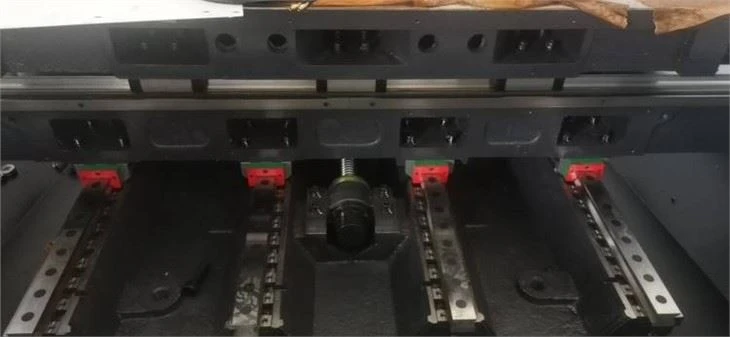
The quality of a CNC Machine Center itself plays a crucial role in ensuring the accuracy of the parts it produces. A high-quality CNC Machine Center is equipped with advanced features and technologies that help to minimize errors and improve precision. Some of the key factors to consider when evaluating the accuracy of a CNC Machine Center include:
- Machine Structure and Rigidity: The machine structure and rigidity are important factors that affect the accuracy of the CNC Machine Center. A rigid machine structure helps to minimize vibrations and deflections during machining, ensuring that the cutting tool remains in the correct position and produces accurate cuts.
- Spindle Accuracy and Stability: The spindle is the heart of the CNC Machine Center, and its accuracy and stability are critical for achieving high-quality machining results. A high-precision spindle with low runout and high rotational speed can help to minimize tool wear and improve the surface finish of the machined parts.
- Control System and Software: The control system and software of the CNC Machine Center are responsible for controlling the movement of the cutting tool and the workpiece. A advanced control system with high-speed processing capabilities and real-time feedback can help to optimize the machining process and ensure accurate part production.
Importance of Training and Skill Development
In addition to using the right measurement techniques and equipment, the skill and expertise of the CNC Operator Vertical Machining Centre also play a crucial role in ensuring the accuracy of the parts produced. A well-trained and experienced CNC operator can understand the machining process, select the appropriate cutting tools and parameters, and operate the CNC Machine Center effectively to achieve high-quality results.
As a CNC Center supplier, we offer comprehensive training and support programs for our customers to help them develop the skills and knowledge needed to operate our CNC machines effectively. Our training programs cover a wide range of topics, including CNC programming, machine operation, maintenance, and troubleshooting. By investing in training and skill development, our customers can improve the productivity, quality, and efficiency of their CNC machining operations.
Conclusion
Measuring the accuracy of the parts produced by a CNC Center is a critical aspect of quality control in precision engineering. By using a combination of direct and indirect measurement techniques, statistical process control methods, and high-quality CNC machines, you can ensure that the parts you produce meet the specified requirements and deliver the performance and reliability expected by your customers.
If you're in the market for a high-quality CNC Machining Center V1270 or need assistance with measuring and improving the accuracy of your machined parts, please don't hesitate to contact us. Our team of experts is here to provide you with the support and guidance you need to make the right decisions for your business.
References
- ASME Y14.5 - Dimensioning and Tolerancing
- ISO 1101 - Geometrical Product Specifications (GPS) - Geometric tolerancing - Tolerances of form, orientation, location and run-out
- Quality Control Handbook, J. M. Juran and F. M. Gryna
- Statistical Process Control for Quality Improvement, D. C. Montgomery


