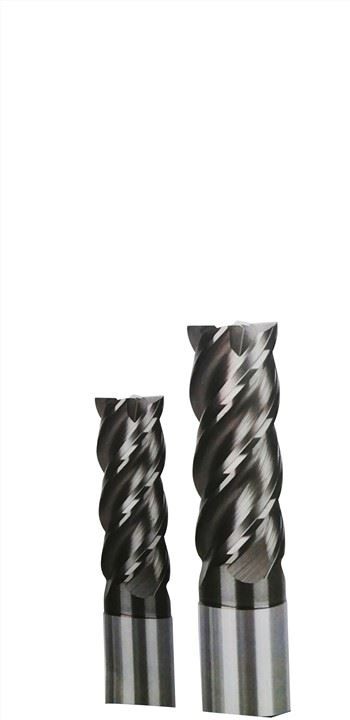
In the world of machining and manufacturing, roughing carbide end mills play a crucial role. As a dedicated carbide end mill supplier, I've witnessed firsthand the significance and unique features of these remarkable tools. In this blog post, I'll delve into the key features of roughing carbide end mills, exploring what makes them indispensable in various machining applications.
High - Speed Machining Capability
One of the most prominent features of roughing carbide end mills is their ability to perform high - speed machining. Carbide, as a material, has excellent heat resistance. This allows the end mill to withstand the high temperatures generated during high - speed cutting operations without significant wear or deformation. When compared to traditional high - speed steel (HSS) end mills, carbide end mills can operate at much faster cutting speeds. For example, in aluminum machining, a roughing carbide end mill can cut at speeds that are several times higher than an HSS end mill. This not only reduces the machining time but also increases the overall productivity of the manufacturing process. The ability to handle high - speed machining also means that more material can be removed in a shorter period, making it ideal for roughing operations where large amounts of material need to be taken off quickly.
Superior Wear Resistance
Carbide is known for its extreme hardness and wear resistance. Roughing carbide end mills are specifically designed to endure the harsh conditions of roughing, where the tool is in constant contact with the workpiece and is subject to high levels of friction and abrasion. The wear - resistant nature of carbide ensures that the cutting edges of the end mill remain sharp for a longer time. This is especially important in roughing processes because dull cutting edges can lead to poor surface finishes, increased cutting forces, and potential damage to the workpiece. By using a roughing carbide end mill, manufacturers can achieve consistent cutting performance over a large number of parts, reducing the frequency of tool changes and associated downtime.
Optimized Chip Evacuation
Efficient chip evacuation is another critical feature of roughing carbide end mills. During roughing operations, a large volume of chips is produced as material is removed from the workpiece. If these chips are not properly evacuated, they can accumulate around the cutting edges of the end mill, causing clogging. Clogged end mills can lead to increased cutting forces, poor surface finishes, and even tool breakage. Roughing carbide end mills are designed with special flute geometries and helix angles to facilitate the smooth flow of chips away from the cutting zone. For instance, some end mills have variable helix angles, which help to break up the chips and prevent them from packing together. This ensures that the cutting process remains stable and efficient, allowing for continuous high - quality machining.


Multiple Cutting Edge Designs
Roughing carbide end mills come in a variety of cutting edge designs, each tailored to specific machining requirements. Some common designs include square end, ball end, and corner - radius end mills. The square - end design is ideal for flat - bottomed cuts and is often used in applications where a high - precision flat surface needs to be created. Carbide Ball End Mill is suitable for machining curved surfaces, such as those found in mold making or aerospace components. The corner - radius end mills, on the other hand, are used to create rounded corners in the workpiece, which can help to reduce stress concentrations and improve the overall strength of the part. The availability of different cutting edge designs allows manufacturers to choose the most appropriate tool for their specific roughing tasks.
Versatility in Material Compatibility
Roughing carbide end mills are highly versatile when it comes to the materials they can machine. They can be used to cut a wide range of materials, including steels, stainless steels, aluminum, titanium, and even some non - ferrous metals. This versatility makes them an essential tool in many manufacturing industries. For example, in the automotive industry, roughing carbide end mills are used to machine engine blocks, transmission components, and other parts made from various metals. In the aerospace industry, they are used to machine lightweight yet strong materials like titanium and aluminum alloys. The ability to work with different materials means that manufacturers can use a single type of end mill for multiple applications, reducing the need for a large inventory of specialized tools.
Rigidity and Stability
Roughing operations often involve high cutting forces, which require a tool that is rigid and stable. Roughing carbide end mills are designed with a solid and robust structure to withstand these forces. The carbide material itself provides a high level of stiffness, which helps to prevent deflection during cutting. Additionally, the end mills are often designed with a large shank diameter relative to the cutting diameter, further enhancing their rigidity. This rigidity ensures that the cutting process is accurate and repeatable, resulting in consistent part quality. For example, in precision machining applications, the stability of the roughing carbide end mill is crucial for achieving tight tolerances and high - quality surface finishes.
Cost - Effectiveness in the Long Run
Although roughing carbide end mills may have a higher upfront cost compared to some other types of end mills, they offer significant cost - savings in the long run. Their long tool life, high - speed machining capability, and ability to perform multiple operations reduce the overall cost per part. With fewer tool changes and less downtime for tool replacement, manufacturers can increase their production efficiency and reduce labor costs. Moreover, the consistent performance of carbide end mills leads to fewer rejected parts, which also contributes to cost savings. For small and large - scale manufacturing operations alike, the cost - effectiveness of roughing carbide end mills makes them an attractive investment.
Conclusion
In conclusion, roughing carbide end mills possess a range of features that make them essential tools in modern machining. Their high - speed machining capability, superior wear resistance, optimized chip evacuation, multiple cutting edge designs, versatility in material compatibility, rigidity, and long - term cost - effectiveness set them apart from other types of end mills. As a carbide end mill supplier, I'm proud to offer a wide selection of Roughing End Mill that can meet the diverse needs of our customers. Whether you're involved in automotive manufacturing, aerospace engineering, or any other industry that requires precision machining, our roughing carbide end mills can help you achieve high - quality results.
If you're interested in learning more about our products or are looking to place an order, we encourage you to reach out to us for a detailed discussion. Our team of experts is ready to assist you in finding the perfect roughing carbide end mill for your specific applications.
References
"Tool Materials and Application," Industrial Press Handbook, 2020.
"Machining Technology: Principles and Applications," ASME Press, 2019.