

As a supplier of VMC 850 machines, I am often asked about the communication interfaces of these advanced pieces of equipment. In this blog post, I will delve into the details of the communication interfaces of VMC 850, exploring their functions, types, and importance in modern manufacturing.
Understanding VMC 850
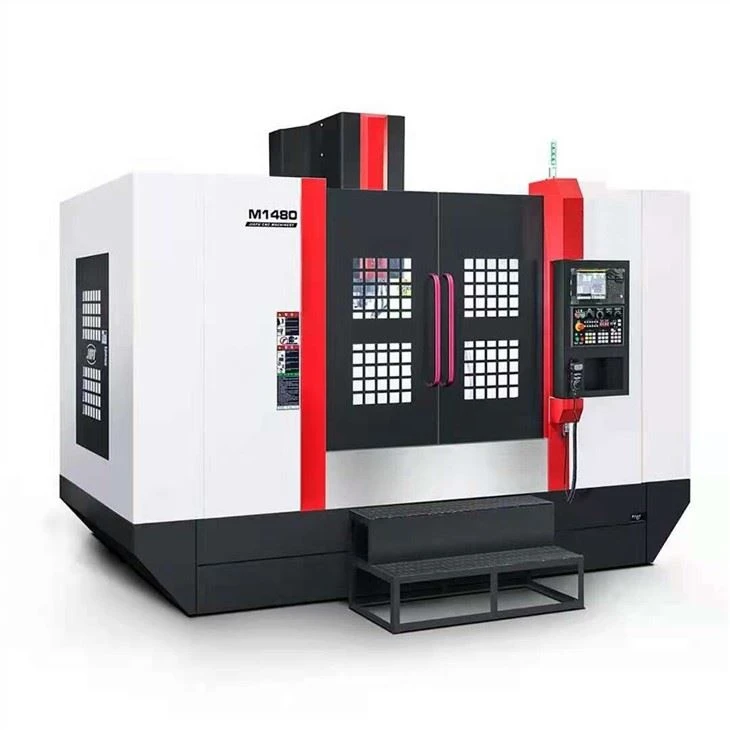
Before we jump into the communication interfaces, let's briefly understand what a VMC 850 is. A VMC 850, or Vertical Machining Center 850, is a type of CNC (Computer Numerical Control) milling machine. It is widely used in the manufacturing industry for its precision and efficiency in machining various materials such as metals, plastics, and composites. The "850" in its name typically refers to certain specifications related to its working area, spindle travel, or other key dimensions.
Importance of Communication Interfaces
In today's digital age, communication interfaces play a crucial role in the operation of VMC 850 machines. They enable seamless data transfer between different components of the machine, as well as between the machine and external devices such as computers, controllers, and other manufacturing equipment. This connectivity is essential for tasks such as programming, monitoring, and controlling the machine's operations, which ultimately leads to improved productivity, accuracy, and flexibility in manufacturing processes.
Types of Communication Interfaces in VMC 850
RS - 232 Interface
One of the most common communication interfaces found in VMC 850 machines is the RS - 232 interface. RS - 232 is a standard for serial communication that has been widely used in industrial applications for decades. It allows for the transfer of data between the CNC controller of the VMC 850 and a computer or other serial devices. This interface is often used for tasks such as uploading and downloading CNC programs, transferring machine parameters, and communicating with external sensors or actuators.
The advantage of the RS - 232 interface is its simplicity and compatibility with a wide range of devices. However, it has some limitations, such as relatively low data transfer rates and limited communication distance.
Ethernet Interface
With the increasing demand for high - speed data transfer and network connectivity, Ethernet interfaces have become increasingly popular in VMC 850 machines. Ethernet provides a fast and reliable way to connect the machine to a local area network (LAN) or the internet. This allows for remote monitoring and control of the machine, as well as integration with other manufacturing systems such as MES (Manufacturing Execution Systems) and ERP (Enterprise Resource Planning) systems.
Using an Ethernet interface, manufacturers can easily transfer large CNC programs, real - time machine data, and diagnostic information. It also enables seamless communication between multiple VMC 850 machines in a production line, facilitating coordinated operations and improved overall efficiency.
USB Interface
USB (Universal Serial Bus) interfaces are also commonly used in VMC 850 machines. USB offers a convenient way to connect external storage devices, such as USB flash drives, to the machine. This allows operators to quickly transfer CNC programs, tool libraries, and other data to and from the machine without the need for a computer. USB interfaces are also used for connecting external input devices, such as keyboards and mice, for easier programming and operation of the machine.
Profibus and CAN Bus
In some industrial applications, VMC 850 machines may be equipped with Profibus or CAN Bus interfaces. Profibus is a fieldbus standard used for communication between industrial devices, while CAN Bus (Controller Area Network) is a serial communication protocol commonly used in automotive and industrial control systems. These interfaces are particularly useful for connecting the VMC 850 to other automation equipment, such as programmable logic controllers (PLCs), sensors, and actuators, in a distributed control system.
Functionality of Communication Interfaces
The communication interfaces in VMC 850 machines serve several important functions:
Program Transfer
One of the primary functions of the communication interfaces is to transfer CNC programs between the machine and an external source. Operators can create or modify CNC programs on a computer using specialized CAM (Computer - Aided Manufacturing) software and then transfer these programs to the VMC 850 via the appropriate communication interface. This process saves time and reduces the risk of errors compared to manual programming on the machine's control panel.
Machine Monitoring and Control
Communication interfaces also enable real - time monitoring and control of the VMC 850 machine. By connecting the machine to a computer or a monitoring system, operators can track various parameters such as spindle speed, feed rate, tool position, and temperature. They can also send commands to the machine to adjust these parameters or perform specific operations, ensuring optimal performance and quality of the machining process.
Data Logging and Analysis
The data transferred through the communication interfaces can be logged and analyzed for various purposes. For example, manufacturers can collect data on machine performance, tool wear, and production statistics to identify areas for improvement, optimize production processes, and predict maintenance needs. This data - driven approach helps in reducing downtime, improving productivity, and lowering production costs.

Integration with Other Equipment
The communication interfaces of VMC 850 machines also allow for seamless integration with other manufacturing equipment. For instance, a VMC 850 can be connected to a robotic loading and unloading system via an Ethernet or Profibus interface. This enables automated material handling, which significantly increases the efficiency of the manufacturing process.
Moreover, VMC 850 machines can be integrated into a larger manufacturing network, where they can communicate with other CNC machines, inspection equipment, and assembly lines. This integration creates a more streamlined and efficient manufacturing environment, known as a smart factory.
Related Products
If you are interested in other types of CNC milling machines, we also offer a wide range of products, including 3 Axis Vmc, Desktop Cnc Milling Machine For Metal, and Precision Cnc Milling Machine 1165. These machines are designed to meet different manufacturing needs and offer high - quality performance and reliability.
Conclusion
In conclusion, the communication interfaces of VMC 850 machines are essential components that enable seamless data transfer, connectivity, and integration in modern manufacturing processes. Whether it is the traditional RS - 232 interface, the high - speed Ethernet interface, or other specialized interfaces, each plays a vital role in ensuring the efficient operation of the machine.
If you are in the market for a VMC 850 machine or have any questions about its communication interfaces, please feel free to contact us for more information. We are committed to providing you with the best products and solutions to meet your manufacturing needs.
References
- "CNC Machining Handbook"
- "Industrial Communication Standards: Principles and Applications"
- Technical documentation of VMC 850 machines


