Hey there! As an endmills supplier, I've been getting a lot of questions lately about the difference between endmills and drills. It's a common confusion, but don't worry—I'm here to break it down for you in a way that's easy to understand.
Let's start with the basics. Drills are designed primarily for making holes. They have a pointed tip that penetrates the material, and as they rotate, they remove material to create a cylindrical hole. You've probably seen a drill bit in action if you've ever done any DIY projects at home. They're great for tasks like putting holes in wood, metal, or plastic for screws or bolts.
On the other hand, endmills are used for a wider range of machining operations. They can cut in multiple directions—sideways, downwards, and even make complex shapes. Instead of a pointed tip like a drill, endmills usually have a flat or rounded end. This allows them to mill (cut) the surface of a material, create slots, pockets, and perform contouring operations.
One of the key differences between the two is the way they cut. Drills mainly cut axially, meaning they go straight down into the material. Endmills, however, can cut both axially and radially. Radial cutting is what allows endmills to create those side cuts and shape the material in different ways.
Another difference is in their flutes. Flutes are the spiral grooves on the cutting tool. Drills typically have two flutes, which help to remove the chips (the small pieces of material that are cut away) from the hole as the drill rotates. Endmills can have different numbers of flutes, depending on the application. For example, a Four Flute End Mill is great for finishing operations because it provides a smoother surface finish. The extra flutes also help to distribute the cutting load more evenly, which can increase the tool's lifespan.
The geometry of the cutting edges is also distinct. Drill bits have a sharp, pointed tip that is optimized for penetration. The cutting edges are designed to start the hole and keep it centered as the drill goes deeper. Endmills, on the other hand, have cutting edges along the sides and sometimes on the end. These edges are shaped to cut the material in different directions and create various geometries. For instance, a Corner Radius Cutter has a rounded corner on the cutting edge, which is useful for creating smooth transitions in the machined part.
Now, let's talk about the materials they're made of. Both drills and endmills can be made from a variety of materials, but carbide is a popular choice for endmills. Carbide is extremely hard and wear - resistant, which makes it suitable for high - speed machining and cutting hard materials. Our Carbide End Mills Cutting Tool HRC60 Degree is a prime example. It can handle tough materials like hardened steel with ease, providing a long tool life and high - quality cuts.
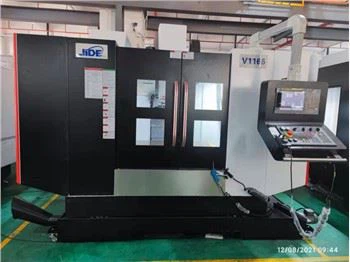
In terms of applications, drills are mainly used in drilling machines, whether it's a handheld drill for home use or a large industrial drilling machine. Endmills are used in milling machines, which can be vertical or horizontal. Milling machines are more versatile and can perform a wide range of operations, from simple slotting to complex 3D machining.
When it comes to choosing between an endmill and a drill, it all depends on the task at hand. If you just need to make a simple hole, a drill is the way to go. But if you want to shape the material, create slots, or perform more complex machining operations, an endmill is your best bet.
As an endmills supplier, I've seen firsthand the importance of using the right tool for the job. Using the wrong tool can lead to poor quality cuts, shorter tool life, and even damage to the workpiece. That's why we offer a wide range of endmills to meet different machining needs. Whether you're a small - scale hobbyist or a large industrial manufacturer, we have the right endmill for you.
If you're in the market for endmills, I encourage you to reach out. We can help you select the best endmill for your specific application, and we offer competitive prices and excellent customer service. Our team of experts is always ready to answer your questions and provide technical support.
In conclusion, understanding the difference between endmills and drills is crucial for anyone involved in machining. By choosing the right tool, you can improve the quality of your work, increase productivity, and save money in the long run. So, if you're looking for high - quality endmills, don't hesitate to get in touch. We're here to help you take your machining projects to the next level.
References


- Machinery's Handbook: A comprehensive reference for mechanical engineers and machinists, which provides detailed information on cutting tools, including drills and endmills.
- Cutting Tool Engineering Magazine: This magazine regularly features articles on the latest developments in cutting tool technology and applications.