

In the world of modern manufacturing, CNC milling machines stand as a cornerstone technology, revolutionizing the way parts are produced. Two main types of CNC milling machines dominate the market: high - speed CNC milling and conventional CNC milling. As a reliable supplier of CNC Milling Machines, I am here to delve into the differences between these two, which will help potential customers make informed decisions when it comes to their machining needs.
Operating Speed and Feed Rates
One of the most obvious differences between high - speed and conventional CNC milling lies in their operating speed. High - speed CNC milling, as the name suggests, is designed to operate at much higher spindle speeds compared to conventional machines. Spindle speeds in high - speed milling can reach up to 40,000 RPM or even higher in some advanced models. In contrast, conventional CNC milling machines typically have spindle speeds ranging from 3,000 to 10,000 RPM.
This difference in speed also translates to feed rates. High - speed machines can move the cutting tool through the material at a significantly faster pace. The ability to operate at high speeds allows high - speed CNC milling to complete machining tasks in a fraction of the time it takes for conventional machines. For example, in a production environment where a high volume of small components needs to be machined, high - speed milling can greatly increase the overall productivity. Check out our VMC Cnc for high - speed capabilities.
Cutting Precision and Surface Finish
High - speed CNC milling offers superior cutting precision and surface finish. The high - speed rotation of the spindle combined with advanced control systems enables the cutting tool to remove material in very small and precise increments. This results in parts with tighter tolerances. Tolerances as low as ±0.005mm can often be achieved with high - speed milling, which is crucial in industries such as aerospace and medical device manufacturing where precision is of the utmost importance.
Conventional CNC milling, while still capable of achieving good precision, may not reach the same level of accuracy as high - speed milling. The surface finish of parts machined by high - speed milling is also generally smoother. The rapid and precise cutting action reduces the chances of tool marks and burrs on the surface of the workpiece, minimizing the need for additional finishing operations. Our Vmc Cnc Center is engineered to provide high - precision machining.
Tool Wear
The choice between high - speed and conventional CNC milling also has a significant impact on tool wear. In high - speed milling, despite the high cutting speeds, the reduced cutting forces can sometimes result in less tool wear. This is because the high - speed operation allows the tool to enter and exit the material quickly, reducing the time during which the tool is in contact with the workpiece. Additionally, high - speed tools are often made from advanced materials such as carbide with specialized coatings that enhance their durability.
Conventional milling, on the other hand, may subject the cutting tool to more prolonged contact with the material. This can lead to increased tool wear, especially when machining hard or abrasive materials. Frequent tool changes in conventional milling can increase production costs and downtime. By choosing high - speed milling and the appropriate tools, manufacturers can achieve longer tool life and reduce overall production costs. Large Cnc Mill can be customized with high - performance tools for various applications.
Material Removal Rate
Material removal rate (MRR) is another key factor where high - speed and conventional CNC milling diverge. High - speed milling can achieve much higher MRRs due to its high spindle speeds and feed rates. The ability to remove material quickly is beneficial for projects where large amounts of material need to be removed in a short period. For instance, in roughing operations, high - speed milling can rapidly reduce the size of the workpiece close to the desired shape.
Conventional CNC milling has a lower MRR compared to its high - speed counterpart. While it may be suitable for more delicate or detailed machining tasks where precision takes precedence over speed, it may not be the best choice for large - scale material removal. High - speed milling provides a significant advantage in terms of overall productivity, especially in mass production scenarios.
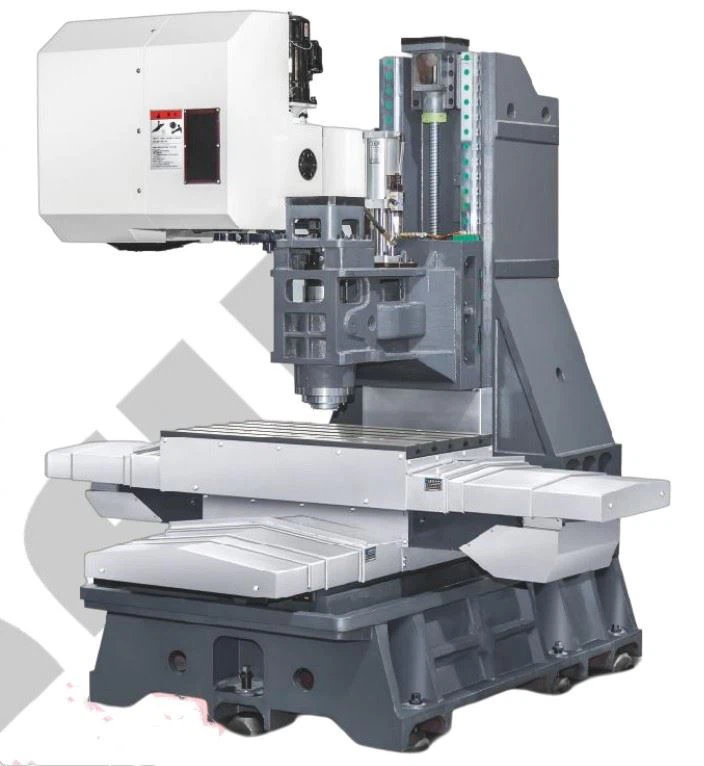

Machine Cost and Complexity
High - speed CNC milling machines generally come with a higher price tag compared to conventional machines. The advanced technology required to achieve high spindle speeds, precise control, and the ability to handle high - speed operations drives up the cost. Additionally, high - speed machines often demand more sophisticated control systems and specialized components, which add to the overall expense.
Conventional CNC milling machines are more affordable and less complex. They are better suited for small - to - medium - sized businesses or those with less demanding machining requirements. Their simplicity also means that they are often easier to operate and maintain. However, as the demand for higher precision and productivity increases, the long - term benefits of high - speed milling may outweigh the initial investment costs.
Application Scope
The application scope of high - speed and conventional CNC milling varies widely. High - speed milling is well - suited for industries that require high - precision, high - volume production such as electronics, automotive, and aerospace. In the electronics industry, for example, high - speed milling can be used to machine tiny and intricate components with tight tolerances.
Conventional CNC milling is more commonly used for general machining tasks, prototyping, and small - batch production. It can handle a wide range of materials including metals, plastics, and wood. In a prototype - building environment, conventional milling may be preferred due to its lower cost and versatility.
Conclusion
In summary, the differences between high - speed and conventional CNC milling are significant and span multiple aspects, including operating speed, cutting precision, tool wear, material removal rate, machine cost, and application scope. As a supplier of CNC Milling Machines, we understand that each customer has unique requirements. Whether you need a high - speed CNC milling machine for large - scale, high - precision production or a conventional machine for more general - purpose or prototyping work, we can provide the right solution.
If you are interested in learning more about our CNC milling machines or wish to discuss your specific production needs, we encourage you to get in touch with us. We are committed to helping you select the most suitable machine for your operations, ensuring high - quality results and maximum productivity.
References
- Groover, M. P. (2016). Fundamentals of Modern Manufacturing: Materials, Processes, and Systems. Wiley.
- Trent, E. M., & Wright, P. K. (2000). Metal Cutting. Butterworth - Heinemann.


