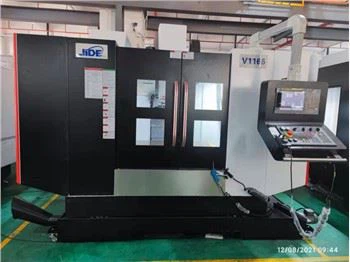
As a supplier of CNC lathes, I often encounter customers with various questions about the capabilities of our machines. One of the frequently asked questions is, "Can a CNC lathe perform facing operations?" In this blog post, I will delve into this topic, exploring the process, benefits, and considerations of facing operations on a CNC lathe.
Understanding Facing Operations
Facing is a machining process used to create a flat surface on the end of a workpiece. It involves removing material from the end face of the workpiece to achieve a smooth, flat finish. This operation is crucial in many manufacturing applications, as it ensures that the workpiece has a precise and accurate end surface, which is essential for subsequent machining processes or assembly.
On a CNC lathe, facing operations are performed using a cutting tool, typically a single-point cutting tool, that is fed perpendicular to the axis of rotation of the workpiece. The cutting tool removes material from the end face of the workpiece as it rotates, creating a flat surface. The depth of cut and feed rate are controlled by the CNC program, allowing for precise and consistent machining.


How a CNC Lathe Performs Facing Operations
CNC lathes are highly versatile machines that can perform a wide range of machining operations, including facing. The process of performing a facing operation on a CNC lathe involves the following steps:
- Workpiece Setup: The workpiece is securely mounted on the lathe's chuck or collet. The chuck or collet holds the workpiece in place and allows it to rotate at a specified speed.
- Tool Selection: A suitable cutting tool is selected for the facing operation. The cutting tool should be appropriate for the material of the workpiece and the desired finish.
- CNC Program Creation: A CNC program is created to control the movement of the cutting tool. The program specifies the cutting parameters, such as the depth of cut, feed rate, and spindle speed.
- Tool Setup: The cutting tool is mounted on the lathe's tool post. The tool post allows the cutting tool to be positioned accurately relative to the workpiece.
- Machining Operation: The CNC program is loaded into the lathe's control system, and the machining operation is started. The cutting tool is fed perpendicular to the axis of rotation of the workpiece, removing material from the end face.
- Inspection: Once the facing operation is complete, the workpiece is inspected to ensure that the flat surface meets the required specifications. Any necessary adjustments can be made to the cutting parameters or the workpiece setup.
Benefits of Using a CNC Lathe for Facing Operations
There are several benefits to using a CNC lathe for facing operations:
- Precision and Accuracy: CNC lathes are capable of achieving high levels of precision and accuracy. The CNC control system allows for precise control of the cutting parameters, ensuring that the facing operation is performed with consistent results.
- Repeatability: CNC lathes can reproduce the same facing operation multiple times with high accuracy. This is particularly useful in mass production applications, where consistent quality is essential.
- Efficiency: CNC lathes can perform facing operations quickly and efficiently. The automated nature of the machining process reduces the time required for setup and machining, increasing productivity.
- Versatility: CNC lathes can perform a wide range of facing operations on different types of workpieces. They can handle various materials, including metals, plastics, and composites.
- Complexity: CNC lathes can perform complex facing operations, such as contour facing and chamfering. The CNC control system allows for the programming of complex tool paths, enabling the creation of intricate shapes and profiles.
Considerations for Facing Operations on a CNC Lathe
While CNC lathes are highly capable machines, there are several considerations to keep in mind when performing facing operations:
- Workpiece Material: The material of the workpiece can affect the cutting parameters and the selection of the cutting tool. Different materials require different cutting speeds, feed rates, and depths of cut.
- Cutting Tool Selection: The selection of the cutting tool is crucial for achieving the desired finish and minimizing tool wear. The cutting tool should be appropriate for the material of the workpiece and the facing operation.
- Tool Wear: Cutting tools can wear out over time, especially when machining hard or abrasive materials. Regular inspection and replacement of the cutting tool are necessary to ensure consistent results.
- Chip Management: During facing operations, chips are generated as the cutting tool removes material from the workpiece. Proper chip management is essential to prevent chip buildup, which can affect the quality of the finish and damage the cutting tool.
- Coolant Usage: Coolant is often used during facing operations to reduce heat and friction, improve tool life, and flush away chips. The type and amount of coolant used should be appropriate for the material of the workpiece and the cutting tool.
Our CNC Lathe Offerings for Facing Operations
As a supplier of CNC lathes, we offer a wide range of machines that are suitable for facing operations. Our product lineup includes Double Spindle Cnc Lathe, Precision Automatic Lathe, and CNC Gang Type Lathe.
- Double Spindle Cnc Lathe: Our double spindle CNC lathes are designed for high-volume production applications. They feature two spindles that can operate simultaneously, allowing for increased productivity and efficiency. These machines are capable of performing facing operations on both ends of the workpiece in a single setup.
- Precision Automatic Lathe: Our precision automatic lathes are ideal for small to medium-sized production runs. They offer high levels of precision and accuracy, making them suitable for facing operations on a variety of workpieces. These machines are equipped with advanced control systems that allow for easy programming and operation.
- CNC Gang Type Lathe: Our CNC gang type lathes are versatile machines that can perform a wide range of machining operations, including facing. They feature a gang tool post that allows for multiple cutting tools to be mounted simultaneously, reducing setup time and increasing productivity. These machines are suitable for both simple and complex facing operations.
Contact Us for Your Facing Operation Needs
If you are looking for a reliable CNC lathe for your facing operations, we are here to help. Our team of experts can provide you with detailed information about our products and help you select the right machine for your specific requirements. We also offer comprehensive after-sales support, including installation, training, and maintenance services.
Whether you are a small job shop or a large manufacturing company, we can provide you with the CNC lathe solution that meets your needs. Contact us today to start a conversation about your facing operation requirements and explore how our CNC lathes can enhance your manufacturing processes.
References
- ASME Y14.5 - Dimensioning and Tolerancing Standard
- ISO 230 - Test Code for Machine Tools
- Machinery's Handbook, 31st Edition