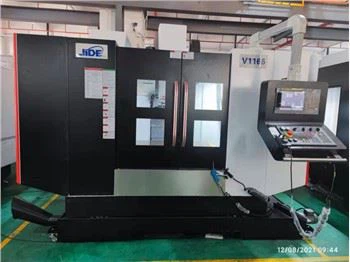
In the realm of manufacturing, precision is paramount, and when it comes to Vertical Machining Centers (VMC) CNC machines, controlling tolerance is a critical aspect that can significantly impact the quality of the final product. As a seasoned VMC CNC supplier, I understand the challenges and intricacies involved in achieving and maintaining tight tolerances. In this blog post, I will share some insights and strategies on how to control the tolerance of VMC CNC machines.
Understanding Tolerance in VMC CNC Machining
Tolerance refers to the allowable variation in the dimensions of a machined part. In VMC CNC machining, achieving the desired tolerance is crucial for ensuring that the part fits and functions as intended. Tolerances are typically specified in engineering drawings and can range from a few micrometers to several millimeters, depending on the application.
There are several factors that can affect the tolerance of VMC CNC machining, including:
- Machine Accuracy: The inherent accuracy of the VMC CNC machine is a fundamental factor in determining the achievable tolerance. High-quality machines with precise linear guides, ball screws, and spindles are more likely to produce parts with tight tolerances.
- Tooling: The quality and condition of the cutting tools used in VMC CNC machining can have a significant impact on tolerance. Dull or worn tools can cause dimensional variations and surface finish problems.
- Workpiece Material: Different materials have different machining characteristics, and some materials may be more difficult to machine to tight tolerances than others. For example, materials with high hardness or toughness may require special tooling and machining strategies.
- Cutting Parameters: The cutting parameters, such as spindle speed, feed rate, and depth of cut, can affect the cutting forces and heat generation during machining. Optimizing these parameters is essential for achieving the desired tolerance and surface finish.
- Environmental Conditions: Temperature, humidity, and vibration can all affect the accuracy of VMC CNC machining. Maintaining a stable environment is crucial for ensuring consistent results.
Strategies for Controlling Tolerance in VMC CNC Machining
Now that we understand the factors that can affect tolerance in VMC CNC machining, let's explore some strategies for controlling tolerance:
- Select the Right Machine: Choosing a VMC CNC machine with high accuracy and precision is the first step in achieving tight tolerances. Consider factors such as the machine's linear guideways, ball screws, spindle accuracy, and control system when selecting a machine. For more information on our range of CNC Mill, please visit our website.
- Use High-Quality Tooling: Investing in high-quality cutting tools is essential for achieving tight tolerances. Choose tools that are specifically designed for the material being machined and the type of operation being performed. Regularly inspect and replace worn or damaged tools to ensure consistent performance.
- Optimize Cutting Parameters: The cutting parameters, such as spindle speed, feed rate, and depth of cut, can have a significant impact on tolerance. Use a machining simulation software to optimize these parameters before starting the actual machining process. This will help to reduce cutting forces, heat generation, and tool wear, resulting in better tolerance control.
- Implement Quality Control Measures: Implementing a comprehensive quality control system is crucial for ensuring that the machined parts meet the desired tolerance. Use inspection tools such as calipers, micrometers, and coordinate measuring machines (CMMs) to measure the dimensions of the parts during and after machining. Regularly calibrate these tools to ensure accurate measurements.
- Maintain a Stable Environment: Temperature, humidity, and vibration can all affect the accuracy of VMC CNC machining. Maintain a stable environment by controlling the temperature and humidity in the machining area and minimizing vibration. Use vibration isolation pads and anti-vibration mounts to reduce the impact of vibration on the machine.
- Train Operators: Proper training of operators is essential for achieving tight tolerances in VMC CNC machining. Ensure that operators are familiar with the machine's controls, programming, and maintenance procedures. Provide regular training and refresher courses to keep operators up-to-date with the latest machining techniques and technologies.
Case Study: Achieving Tight Tolerances with Our Cnc Milling Center Vmc 850
To illustrate the effectiveness of our strategies for controlling tolerance in VMC CNC machining, let's consider a case study of a customer who needed to machine a complex part with tight tolerances using our Cnc Milling Center Vmc 850.


The customer provided us with a detailed engineering drawing of the part, which specified tight tolerances for several critical dimensions. Our team of engineers carefully analyzed the drawing and developed a machining plan that included the selection of the appropriate cutting tools, optimization of the cutting parameters, and implementation of quality control measures.
We used our Cnc Milling Center Vmc 850 to machine the part, which is equipped with high-precision linear guideways, ball screws, and a powerful spindle. We also used high-quality cutting tools that were specifically designed for the material being machined.
During the machining process, we closely monitored the cutting forces, temperature, and tool wear to ensure that the part was being machined within the desired tolerance. We also used a CMM to measure the dimensions of the part at regular intervals to verify its accuracy.
After the machining process was completed, we performed a final inspection of the part using a CMM. The results showed that the part met all of the specified tolerances, and the customer was very satisfied with the quality of the finished product.
Conclusion
Controlling tolerance in VMC CNC machining is a complex and challenging task that requires a combination of advanced technology, skilled operators, and strict quality control measures. By understanding the factors that can affect tolerance and implementing the strategies outlined in this blog post, you can achieve tight tolerances and produce high-quality parts that meet the most demanding specifications.
If you are interested in learning more about our VMC CNC machines or would like to discuss your specific machining requirements, please do not hesitate to contact us. Our team of experts is always available to provide you with the information and support you need to make the right decision for your business.
References
- "CNC Machining Handbook" by John A. Schey
- "Manufacturing Engineering and Technology" by Serope Kalpakjian and Steven R. Schmid
- "Precision Machining Technology" by David A. Dornfeld