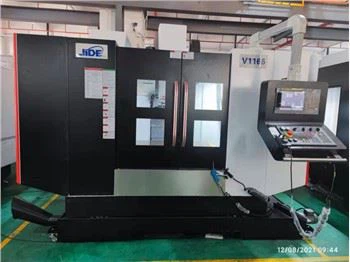
Evaluating the performance of VMC (Vertical Machining Center) CNC machines is crucial for both manufacturers and end - users. As a VMC CNC supplier, I understand the significance of a comprehensive evaluation process to ensure that the machines meet the high - standards of the industry and the specific needs of our customers. In this blog, I will share some key aspects to consider when evaluating the performance of VMC CNC machines.
1. Precision and Accuracy
Precision and accuracy are the cornerstones of a high - performing VMC CNC machine. Precision refers to the machine's ability to repeat the same operation with minimal variation, while accuracy is about how close the machine's output is to the intended design.
Dimensional Accuracy
The dimensional accuracy of a VMC CNC is measured by how closely the machined part matches the specified dimensions in the CAD model. This can be evaluated using precision measuring tools such as calipers, micrometers, and coordinate measuring machines (CMMs). For example, if a part is designed to have a diameter of 50mm, a high - quality VMC CNC should be able to machine it within an acceptable tolerance range, say ±0.01mm.
Geometric Accuracy
Geometric accuracy involves the machine's ability to maintain the correct shape and orientation of the machined part. This includes straightness, flatness, perpendicularity, and parallelism. Deviations in geometric accuracy can lead to parts that do not fit together properly or do not function as intended. To assess geometric accuracy, specialized inspection equipment and techniques are often used.
2. Speed and Productivity
In the manufacturing industry, time is money. The speed at which a VMC CNC can complete a machining operation directly impacts productivity.
Cutting Speed
Cutting speed is determined by the rotational speed of the spindle and the feed rate of the cutting tool. A higher cutting speed allows for faster material removal, reducing the overall machining time. However, it must be balanced with the tool's durability and the quality of the machined surface. Modern VMC CNC machines are equipped with high - speed spindles that can reach speeds of up to 20,000 RPM or more, enabling rapid machining of various materials.
Rapid Traverse Rate
The rapid traverse rate is the speed at which the machine's axes can move when not cutting. A high rapid traverse rate reduces the non - cutting time between machining operations, increasing the overall productivity of the machine. For instance, a machine with a rapid traverse rate of 30m/min can move the cutting tool quickly to the next machining position, minimizing idle time.
3. Surface Finish
The surface finish of a machined part is an important quality indicator. A smooth surface finish not only enhances the aesthetic appearance of the part but also improves its functionality and durability.
Tool Selection and Geometry
The choice of cutting tools and their geometry significantly affects the surface finish. Tools with sharp edges and appropriate coatings can produce a smoother surface. For example, ball - nose end mills are commonly used for finishing operations on complex surfaces, as they can follow the contour of the part more precisely.
Machining Parameters
Machining parameters such as cutting speed, feed rate, and depth of cut also play a role in surface finish. Optimal settings can minimize tool marks and chatter, resulting in a high - quality surface. For instance, a lower feed rate and a smaller depth of cut can often produce a better surface finish, although this may increase the machining time.
4. Spindle Performance
The spindle is the heart of a VMC CNC machine, and its performance directly affects the machining quality and efficiency.
Power and Torque
The spindle power determines the machine's ability to cut through different materials. Higher power spindles can handle tougher materials and larger cutting depths. Torque, on the other hand, is important for maintaining a consistent cutting speed, especially when machining at low RPMs. A spindle with high torque at low speeds can prevent stalling and ensure smooth machining operations.
Spindle Speed Range
A wide spindle speed range allows the machine to adapt to different machining requirements. For example, when machining soft materials like aluminum, a high spindle speed can be used to achieve a fast material removal rate. When machining hard materials like steel, a lower spindle speed may be required to avoid excessive tool wear.
5. Control System
The control system of a VMC CNC machine is responsible for managing all the machining operations. A reliable and user - friendly control system is essential for efficient and accurate machining.
Ease of Programming
A good control system should have an intuitive programming interface that allows operators to easily create and modify machining programs. This can reduce the programming time and minimize the risk of errors. Some modern control systems support conversational programming, which enables operators to input machining instructions in plain language.
Functionality and Flexibility
The control system should offer a wide range of functions and features, such as tool compensation, automatic tool change, and multi - axis interpolation. These functions enhance the machine's versatility and allow for more complex machining operations. Additionally, the control system should be able to communicate with other devices and software, such as CAD/CAM systems, for seamless integration into the manufacturing process.
6. Reliability and Durability
Reliability and durability are key factors in the long - term performance of a VMC CNC machine.
Build Quality
The build quality of the machine, including the frame, guideways, and ball screws, determines its stability and resistance to wear and tear. A well - built machine with high - quality components is less likely to experience breakdowns and will have a longer service life.


Maintenance Requirements
Regular maintenance is essential for keeping a VMC CNC machine in good working condition. A machine with easy - to - access components and clear maintenance instructions can reduce the maintenance time and cost. Additionally, the availability of spare parts and technical support is also important for ensuring the machine's continuous operation.
7. Cost - effectiveness
When evaluating the performance of a VMC CNC machine, cost - effectiveness is an important consideration. This includes not only the initial purchase price but also the operating costs over the machine's lifetime.
Purchase Price
The purchase price of a VMC CNC machine can vary significantly depending on its size, features, and brand. It is important to compare different models and suppliers to find a machine that offers the best value for money. You can check the VMC 850 Price for a better understanding of the price range.
Operating Costs
Operating costs include energy consumption, tooling costs, and maintenance expenses. A machine with high energy efficiency and low tool wear can reduce the operating costs over time. Additionally, choosing a machine with a reliable and cost - effective tooling system can also contribute to cost - savings.
Conclusion
Evaluating the performance of VMC CNC machines is a multi - faceted process that requires considering various factors such as precision, speed, surface finish, spindle performance, control system, reliability, and cost - effectiveness. As a VMC CNC supplier, we are committed to providing high - quality machines that meet the diverse needs of our customers. If you are in the market for a VMC CNC machine, we encourage you to contact us for more information and to discuss your specific requirements. We are here to assist you in making the right choice for your manufacturing operations.
References
- Smith, J. (2018). CNC Machining Handbook. Industrial Press.
- Jones, R. (2020). Precision Manufacturing Technology. McGraw - Hill.
- Brown, A. (2019). Advanced CNC Programming. Wiley.