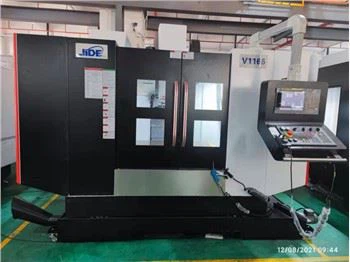
Hey there! As a supplier of CNC turning lathe machines, I often get asked about the difference between live tooling and non - live tooling CNC turning lathe machines. In this blog, I'm gonna break it down for you in simple terms.
What's a CNC Turning Lathe Machine?
Before we dive into the differences, let's quickly understand what a CNC turning lathe machine is. It's a super cool piece of equipment that uses computer - numerical control (CNC) to automate the turning process. This means it can precisely shape materials like metal, wood, or plastic into the desired form. We offer a range of these machines, including CNC Gang Type Lathe, Horizontal Cnc Lathe Machine, and Precision Automatic Lathe.
Non - Live Tooling CNC Turning Lathe Machine
Let's start with the non - live tooling ones. These machines are pretty straightforward. In a non - live tooling CNC turning lathe, the cutting tools are fixed. They don't have any rotational or additional movement apart from the basic linear motion that's used to cut into the workpiece.
The main function of a non - live tooling lathe is to perform basic turning operations. For example, it can create cylindrical shapes by removing material from the outer diameter of a workpiece as it rotates. It's great for simple jobs like making shafts, pins, or other parts that only require basic turning.
One of the big advantages of non - live tooling machines is their simplicity. They're easier to operate and maintain. Since there are fewer moving parts, there's less that can go wrong. This also means they're generally more affordable, which is a huge plus for small businesses or those just starting out in the machining industry.
However, non - live tooling machines do have their limitations. They're not very versatile. If you need to perform more complex operations like milling, drilling holes at an angle, or creating grooves with specific profiles, a non - live tooling lathe just won't cut it. You'd have to transfer the workpiece to another machine, which takes time and can introduce errors in alignment.
Live Tooling CNC Turning Lathe Machine
Now, let's talk about live tooling CNC turning lathe machines. These are the more advanced cousins of non - live tooling lathes. In a live tooling lathe, the cutting tools can rotate independently of the workpiece. This opens up a whole new world of possibilities.
With live tooling, you can perform multiple operations in one setup. For instance, you can turn the workpiece to create the basic cylindrical shape and then use the live tools to drill holes, mill flat surfaces, or cut keyways without having to move the workpiece to another machine. This saves a ton of time and improves the accuracy of the final part.
Live tooling machines are also great for producing complex parts. They can handle jobs that require high precision and intricate details. Industries like aerospace, automotive, and medical device manufacturing often rely on live tooling lathes to make parts with tight tolerances and complex geometries.
But, of course, all these benefits come at a cost. Live tooling CNC turning lathe machines are more expensive than non - live tooling ones. They're also more complex to operate and maintain. The additional moving parts mean there's a higher chance of something breaking down, and you'll need skilled operators who know how to program and run these machines properly.


Key Differences in Operation
In terms of operation, the difference between the two is quite noticeable. When using a non - live tooling lathe, you're mainly focused on the rotation of the workpiece and the linear movement of the fixed cutting tools. The programming is relatively simple, usually just specifying the feed rate, depth of cut, and the path of the tool along the workpiece.
On the other hand, operating a live tooling lathe requires more advanced programming skills. You not only have to control the movement of the workpiece and the linear motion of the tools but also the rotation of the live tools. The programming has to account for multiple axes of movement and the coordination between the different operations.
Productivity and Efficiency
When it comes to productivity, live tooling machines have a clear edge. Since they can perform multiple operations in one setup, they can produce parts much faster than non - live tooling machines. This means you can increase your production output in less time, which is a huge advantage in a competitive market.
Non - live tooling machines, while slower, can still be efficient for simple jobs. If you're making large quantities of the same basic part, a non - live tooling lathe can be set up to run continuously, producing parts with consistent quality.
Quality of the Final Product
The quality of the final product also differs between the two types of machines. Live tooling lathes can produce parts with higher precision and better surface finish. The ability to perform multiple operations in one setup reduces the chances of misalignment and errors that can occur when transferring the workpiece between different machines.
Non - live tooling machines can still produce high - quality parts for simple applications. But for complex parts, the limitations in their functionality can result in parts that don't meet the required specifications as accurately as those made on a live tooling lathe.
Which One Should You Choose?
So, which type of CNC turning lathe machine is right for you? Well, it depends on your specific needs. If you're a small business or just starting out, and you mainly need to make simple parts, a non - live tooling lathe might be the way to go. It's affordable, easy to operate, and can still get the job done for basic turning operations.
However, if you're in an industry that requires the production of complex parts with high precision, or if you want to increase your productivity by performing multiple operations in one setup, a live tooling CNC turning lathe machine is the better choice. It might cost more upfront, but the long - term benefits in terms of quality and efficiency can make it a worthwhile investment.
Let's Talk
Whether you're leaning towards a live tooling or non - live tooling CNC turning lathe machine, I'm here to help. I can answer all your questions, provide more detailed information about our products, and help you find the machine that best suits your needs. If you're interested in purchasing a CNC turning lathe machine, don't hesitate to reach out. We can have a chat about your requirements and see how we can work together.
References
- "CNC Machining Handbook" - A comprehensive guide on CNC machining processes and equipment.
- Industry reports on CNC turning lathe technology trends.