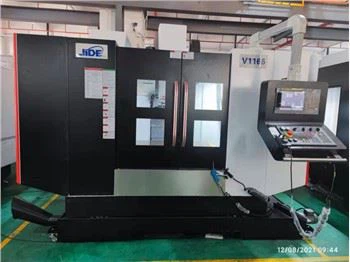
Can a CNC lathe be automated? You bet it can! I'm in the business of supplying CNC lathes, and I've seen firsthand how automation has revolutionized this industry. In this blog, I'll share my insights on the automation of CNC lathes, including the benefits, the technology behind it, and some real - world examples.
Let's start with the basics. A CNC (Computer Numerical Control) lathe is a machine tool that uses computer programming to control the movement of the cutting tool and the rotation of the workpiece. It's a powerful piece of equipment that can produce high - precision parts with great efficiency. And when we talk about automation, we're essentially adding a layer of self - sufficiency to this already impressive machine.
One of the biggest benefits of automating a CNC lathe is increased productivity. An automated CNC lathe can run 24/7 with minimal human intervention. Once the program is set up, it can continuously produce parts without the need for an operator to be present all the time. This means more parts can be made in a shorter period, which directly translates to higher profits for manufacturers. For example, a small - scale manufacturing shop that used to produce 100 parts a day with a manual CNC lathe can potentially double or even triple that output with an automated one.
Another advantage is improved quality control. Automation reduces the risk of human error. When a human operator is in charge, factors like fatigue, distraction, or inconsistent technique can lead to variations in the parts being produced. But an automated CNC lathe follows the programmed instructions precisely every single time. This results in parts that are more consistent in terms of dimensions, surface finish, and overall quality. This is especially crucial in industries where precision is non - negotiable, such as aerospace and medical device manufacturing.


Now, let's talk about the technology that makes CNC lathe automation possible. There are several key components involved. First up is the CNC controller. This is the brain of the machine. It interprets the computer - generated code and sends signals to the various motors and actuators on the lathe to control the movement of the cutting tool and the rotation of the workpiece. Modern CNC controllers are incredibly sophisticated and can handle complex programming, allowing for the production of highly intricate parts.
Robotic loading and unloading systems are also essential for automation. These robots can pick up raw materials, place them on the lathe, and remove the finished parts once the machining process is complete. They can work quickly and accurately, reducing the time between cycles and increasing overall efficiency. Some robotic systems are even capable of performing multiple tasks, such as inspecting the parts for quality before moving them to the next stage of production.
Sensor technology is another important aspect. Sensors can be used to monitor various parameters during the machining process, such as temperature, vibration, and tool wear. If a sensor detects an issue, it can send a signal to the CNC controller, which can then adjust the machining parameters or even stop the machine to prevent damage. This helps to ensure the longevity of the machine and the quality of the parts being produced.
In the real world, many manufacturers are already reaping the benefits of automated CNC lathes. Take the automotive industry, for example. Car manufacturers need to produce a large number of high - quality engine components, such as pistons and crankshafts, on a daily basis. By using automated CNC lathes, they can meet the high - volume demand while maintaining strict quality standards. The same goes for the electronics industry, where small, precise parts are required for devices like smartphones and laptops.
As a CNC lathe supplier, I offer a range of products that are suitable for automation. For instance, our CNC Lathe 6 8 with FANUC Controller is a popular choice. The FANUC controller is known for its reliability and advanced features, making it easy to integrate with automation systems. It can handle complex machining operations with ease, and its user - friendly interface allows operators to quickly set up and program the machine.
Our Large Cnc Lathe is also a great option for those who need to machine larger workpieces. It has a robust construction and powerful motors, which can handle heavy - duty machining tasks. With the right automation equipment, it can be transformed into a highly efficient production machine, capable of producing large - scale parts in a short time.
And if you're looking for a machine to work with metal, our Cnc Metal Lathe is a top - notch choice. It's designed specifically for metal machining and can produce high - quality metal parts with precision. The automation capabilities of this lathe can help you streamline your metal - working processes and increase your production capacity.
If you're considering automating your CNC lathe, there are a few things to keep in mind. First, you need to assess your production needs. How many parts do you need to produce? What level of precision is required? Based on these factors, you can choose the right CNC lathe and automation equipment. It's also important to work with a reliable supplier who can provide you with technical support and training. As a supplier, I offer comprehensive after - sales service to ensure that your automated CNC lathe runs smoothly and efficiently.
In conclusion, the answer to the question "Can a CNC lathe be automated?" is a resounding yes. Automation offers numerous benefits, including increased productivity, improved quality control, and cost savings. With the right technology and equipment, any CNC lathe can be transformed into an automated production powerhouse. If you're interested in exploring the possibilities of automated CNC lathes for your business, don't hesitate to reach out. We can have a detailed discussion about your specific needs and find the best solution for you. Let's work together to take your manufacturing to the next level!
References
- "CNC Machining Handbook"
- Industry reports on CNC lathe automation trends