


The importance of bearings in modern machinery is self-evident, but the annual repair costs and downtime due to bearing damage amount to at least a million dollars, with indirect losses even greater. A major reason for this is the purchase of counterfeit bearings. Far too many people have likely encountered this situation. Therefore, while ensuring proper installation and maintenance of bearings, the most important thing is to avoid buying fake bearings.
I. Eight Common Fraudulent Methods in Bearing Manufacturing
1. Using iron or carbon steel to manufacture bearings (insufficient hardness) and repairing defective bearings (insufficient precision);
2. Labeling inferior bearings or those from small factories with the trademarks of major manufacturers, counterfeiting the inner and outer packaging and certificates of conformity of well-known manufacturers;
3. Impersonating users, distributors, agents, or even factory outlets of well-known manufacturers;
4. Using substandard bearings to impersonate genuine bearings;
5. Impersonating ordinary bearings to impersonate high-precision bearings;
6. Mixing genuine products with high-quality ones;
7. Selling counterfeit goods at genuine prices, selling genuine goods at high prices, and using fake pricing;
8. Offering counterfeit goods for cheap prices and genuine goods for high-quality ones.
II. Characteristics of Counterfeit Bearings
1. They appear almost identical to genuine bearings, but their load-bearing capacity, limiting speed, etc., are unreliable for their intended use.
2. To reduce manufacturing costs, no precision is required.
3. To lower prices, inferior bearing steel materials are used.
4. Improper packaging and transportation methods negatively impact the precision of the bearings.
III. Impacts of Counterfeit Bearings
1. Short service life. Bearings will fail prematurely during use, directly increasing company budgets and causing economic losses.
2. Dangerous accidents caused by counterfeit bearings. High failure rate of counterfeit bearings can cause sudden abnormal rotation, sudden stoppage, or overheating and fire in machinery.
3. Disruption of the bearing market's purchasing and distribution relationships. Driven by profit, trust is damaged, leaving bearing manufacturers unable to defend themselves and users distrustful.
IV. Bearing Brands on the Market
1. Foreign bearing brands: SKF (Sweden), NSK (Japan), and TIMKEN (USA), etc.
2. Domestic bearing brands: Luoyang Bearing, Wafangdian Bearing, etc.
There's no absolute good or bad in bearings; it mainly depends on how they're used and where they're placed.
V. Five Steps to Identifying Bearings
1. Outer Packaging and Certificate of Conformity;
2. Stamped Lettering;
3. Overall Condition;
4. Metallic Sheen;
5. Listen to the Sound.
1. Outer Packaging and Certificate of Conformity
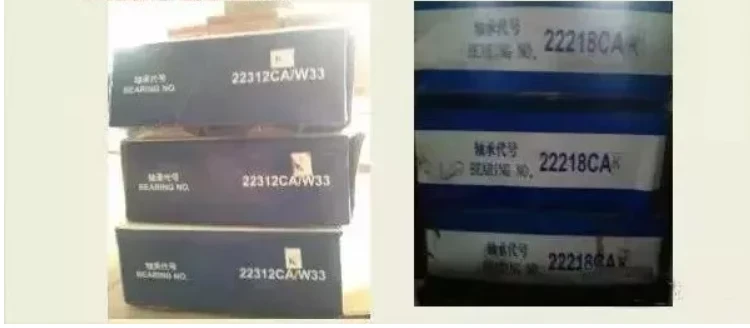
A. Is the outer packaging clear? Generally, reputable brands have their own designers to design the outer packaging and arrange for production in qualified factories. Therefore, the packaging is very clear, from lines to color blocks, without any ambiguity.
B. Is the certificate of conformity standardized?
2. Stamped Lettering
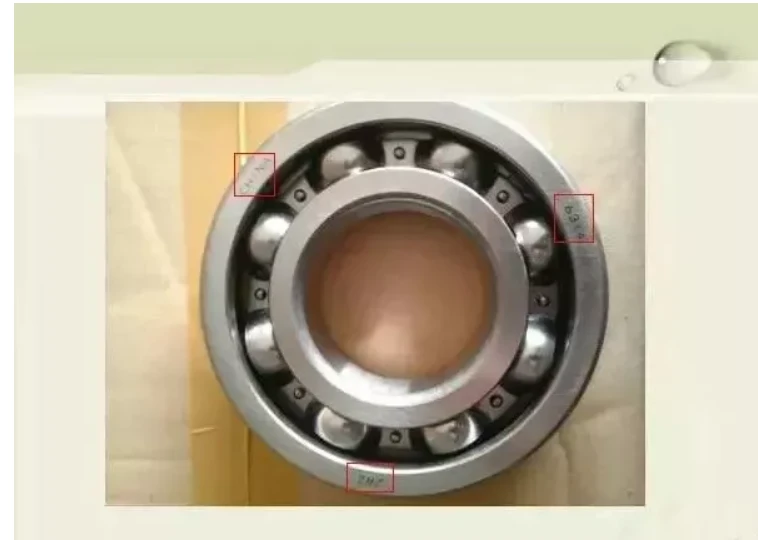
A. The bearing body will have the brand name, number, etc., stamped on it;
B. Domestic stamped lettering is very small. Reputable manufacturers mostly use laser etching, pressing the lettering before the bearing undergoes heat treatment. Therefore, although the lettering is small, it is deeply recessed and very clear. Counterfeit products often have blurry lettering; due to crude printing techniques, the lettering appears superficial, and some can even be easily rubbed off.
C. The steel stamp on NSK bearings from Japan feels imperceptible to the touch, but its presence can be felt by lightly touching it with a fingernail. On most domestically produced or counterfeit bearings, the stamp is either raised or recessed into the bearing surface.
3. Overall Condition
A. Are there any issues with appearance quality, poor machining quality, or significant runout? Bearings are precision mechanical products with a surface roughness below 1.6.
B. Are there any cloudy oil stains? Domestically produced bearings tend to leave thick oil stains and have a noticeable rust-preventive oil smell. Genuine imported bearings show almost no trace of rust-preventive oil.
C. Is it genuine? Obvious errors in specifications and models include the lack of a tapered inner bore on CAK bearings and the presence of only a single-sided seal on 2RS bearings.
4. Gloss
The quality of a bearing depends on the quality of the steel and the level of heat treatment.
A. Bearing chamfers are not polished after heat treatment. Genuine bearing chamfers are very smooth and have a gray metallic luster. Inferior products come in two types: one is made using relatively high-quality domestic bearings, with smooth chamfers, but the color is not the gray metallic luster; the other is made using materials from small domestic factories, with rough chamfers, dents, and a dull finish.
B. Bearing steel is divided into six categories: high-carbon chromium bearing steel, chromium-free bearing steel, carburized bearing steel, stainless bearing steel, medium-high temperature bearing steel, and anti-magnetic bearing steel. a. If rust spots are found, the material is problematic; b. If severe impact marks are found, the material is problematic; c. If the ball bearings or rollers are of inconsistent thickness, the manufacturer has cut corners.

5. Listen to the sound
Hold the inner bearing sleeve with your left hand and rotate the outer bearing sleeve with your right hand, listening for any unusual noises. Most counterfeit products are produced under inferior conditions, inevitably introducing impurities such as sand into the bearing during production, which will cause unusual noises when rotating.


