


Have you ever wondered-
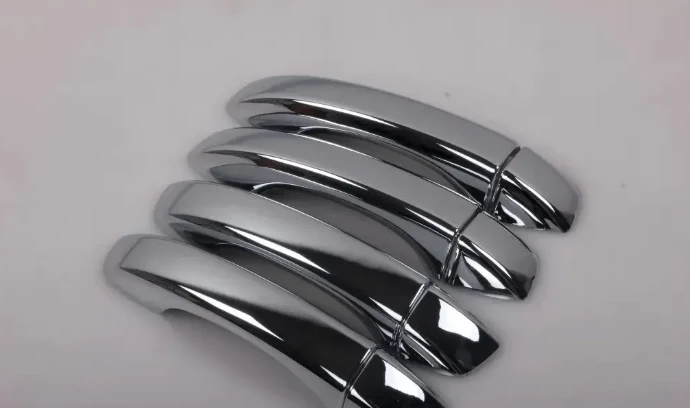
How do plastic parts on cars-like front grilles, door handles, and wheel rims-manage to look as shiny as metal?
Is it paint? Paint can't achieve that mirror-like finish.
Is it a wrap? A wrap can't replicate that metallic texture.
The real secret to turning plastic into "metal" is a process nicknamed "surface magic": electroplating.
Material Surface Treatment: Electroplating | Industry News | Jialong Group
Don't underestimate this metal film, which is so thin it's almost invisible. It measures just a few microns-dozens of times thinner than a human hair-yet without it, your car emblem would rust within days, interior trim would get scratched after just a few touches, and electronic connectors wouldn't hold a solder joint.
I. What exactly is electroplating? It can be explained in one sentence.
At its core, electroplating uses electricity to "transport" metal ions onto the surface of another object.
How does this transport happen? The part to be processed is placed in a metal salt solution and connected to a direct current (DC) power source. The part acts as the cathode (negative electrode), while a sheet of the metal to be plated serves as the anode (positive electrode).
Once the current flows, positively charged metal ions in the solution migrate toward the cathode. Upon reaching the part's surface, they gain electrons and are reduced to metal atoms, stacking layer by layer to form a uniform, dense metal coating.
Take nickel plating as an example: the nickel plate at the anode loses electrons, becoming nickel ions that enter the solution; at the cathode, the nickel ions gain electrons, are reduced to metallic nickel, and deposit onto the part. This cycle of release and deposition continues as long as the current flows, allowing the coating to keep growing.
It's that simple. It isn't just painted on; it actually "grows" onto the surface.
II. Why electroplate? Three key reasons: Protection, Performance, and Aesthetics.
Plating a metal layer onto an object's surface isn't just about looks. Electroplating offers three core benefits:
First: Protection. The coating isolates the base material from air and moisture, resisting corrosion and enhancing wear resistance. The chrome-plated parts on your car-constantly exposed to wind, sun, and rain-rely on this "armor" to withstand the elements.
Second: Performance. Gold plating enhances conductivity, chrome plating improves reflectivity, and nickel plating boosts heat resistance. Different metal coatings address specific performance requirements.
Third aspect: Appearance. This is the most familiar aspect-giving the product a metallic luster and enhancing its decorative appeal.
Introduction to 8 Common Automotive Surface Decorative Processes, with a Comparison of Pros and Cons (Sohu Auto)
III. Can Plastic Be Electroplated? Not Only Can It Be, but It Is Also a Mainstream Practice
Many people assume that electroplating is limited to metal substrates. This is a misconception.
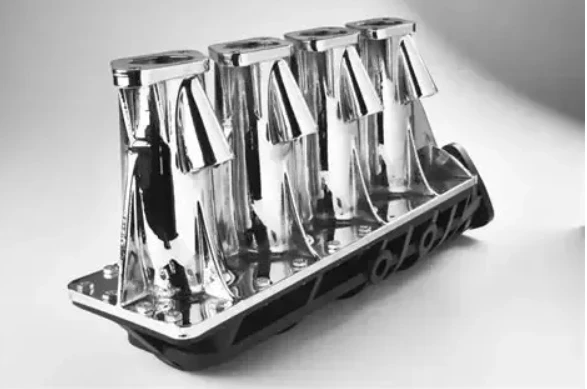
Plastic can indeed be electroplated, and it is used extensively-particularly for automotive interior and exterior trim components.
However, plastic has an inherent drawback: it is non-conductive. Without conductivity, it cannot be directly electroplated using an electric current. So, how is this handled?
The solution involves two steps:
Step 1: Pre-treatment. First, the plastic surface is roughened (using chemical agents to create microscopic irregularities), followed by sensitization and activation. Finally, a very thin conductive metal film (copper or nickel, 0.1–0.3 microns thick) is deposited onto the surface via electroless plating. This step relies on chemical reactions rather than electricity.
Step 2: Electroplating. Once the conductive layer is in place, the process proceeds like standard metal electroplating: an electric current is applied to build up the subsequent metal coating layers.
Currently, the plastic best suited for electroplating is ABS, followed by PC+ABS alloys. Those shiny plastic decorative parts on your car are, in all likelihood, electroplated ABS.
How to Draw an Electroplating Process Flowchart? A Simple Five-Step Guide (Xunjie Drawing)
IV. Three Layers, Each with a Specific Role-The "Standard Configuration" for Automotive Plastic Parts
Automotive plastic trim components (both interior and exterior) typically utilize a "copper-nickel-chrome" three-layer electroplating system. Each layer serves a specific purpose:
Bottom layer: Copper plating (6–8 microns). Adhering directly to the plastic substrate, this layer acts as a base coat-strengthening the adhesion between the coating and the plastic while providing fundamental corrosion resistance. Copper is relatively soft, allowing it to buffer stress and prevent the coating from peeling off easily.
Middle layer: Nickel plating (8–12 microns). This serves as the core protective layer of the entire coating system. Nickel offers excellent corrosion resistance and sufficient hardness, significantly enhancing overall resistance to corrosion and wear.
The outermost layer: Chromium plating (0.12–0.3 microns). This is the "face" of the finish. Although extremely thin, the chromium layer provides a superb reflective sheen while offering heat and wear resistance. That mirror-like luster you see is thanks to this chromium layer.
The combined thickness of these three layers is merely a dozen or so microns-thinner than a sheet of paper-yet each layer is indispensable.
V. Different Metals, Different Strengths-A Rich "Menu" of Plating Options
Beyond the "iron triangle" of copper, nickel, and chromium, many other metals are used in electroplating:
Gold plating: Offers excellent electrical conductivity and chemical stability; the top choice for high-end electronic components and luxury decorative items.
Tin-lead plating: Features excellent solderability; widely used for PCBs and electronic connectors. However, lead-containing formulas are being phased out in favor of pure tin or matte tin.
Palladium-nickel plating: Offers corrosion resistance, wear resistance, and stable contact performance; an ideal choice for precision electronic contacts, with wear resistance that even surpasses gold plating.
Silver plating: Boasts the best electrical conductivity of all metals but is prone to oxidation.
The choice of plating metal depends entirely on the desired functionality.
VI. Electroplating: A Time-Honored Craft That Continues to Evolve
Electroplating has a history spanning over a century, yet it is far from obsolete.
The global electroplating market is projected to reach $19.74 billion by 2025 and is expected to grow to $25.15 billion by 2032. It is utilized across the automotive, electronics, and aerospace industries.
In the semiconductor sector, electroplating is a core process for chip interconnection and stacking. In the automotive industry, the trend toward lightweighting ensures a steadily increasing demand for electroplated plastic parts.
At the same time, the industry is addressing a long-standing issue: environmental protection. Traditional electroplating utilized hexavalent chromium, which is highly toxic. Increasingly, companies are switching to trivalent chromium plating, which significantly reduces toxicity without compromising performance-balancing effective results with environmental responsibility. RFID Fully Automated Electroplating Production Line | Industry News | News Center | Jianyong Technology
In Conclusion
Electroplating may sound like a highly technical field, but at its core, it is simply the process of "using electricity to transfer metal onto the surface of another object."
It is not a complex process, yet it is vitally important. The car emblems you touch, the mirror-like decorative finishes you see, and the electronic devices you use every day all rely on electroplating.
The next time you spot a gleaming car logo, you can tell the person next to you: that shiny finish wasn't sprayed or stuck on-it actually "grew" right there.


